AI & Tech
Chinese firms buy more than 1 million Nvidia GPUs to fill AI computing gap, report says
The Financial Times reported that Chinese technology companies bought more than 1 million Nvidia gaming and workstation GPUs in a year, while the reported alternatives are mainly suited to simpler AI workloads.
AiSiWhale・Published
What happened
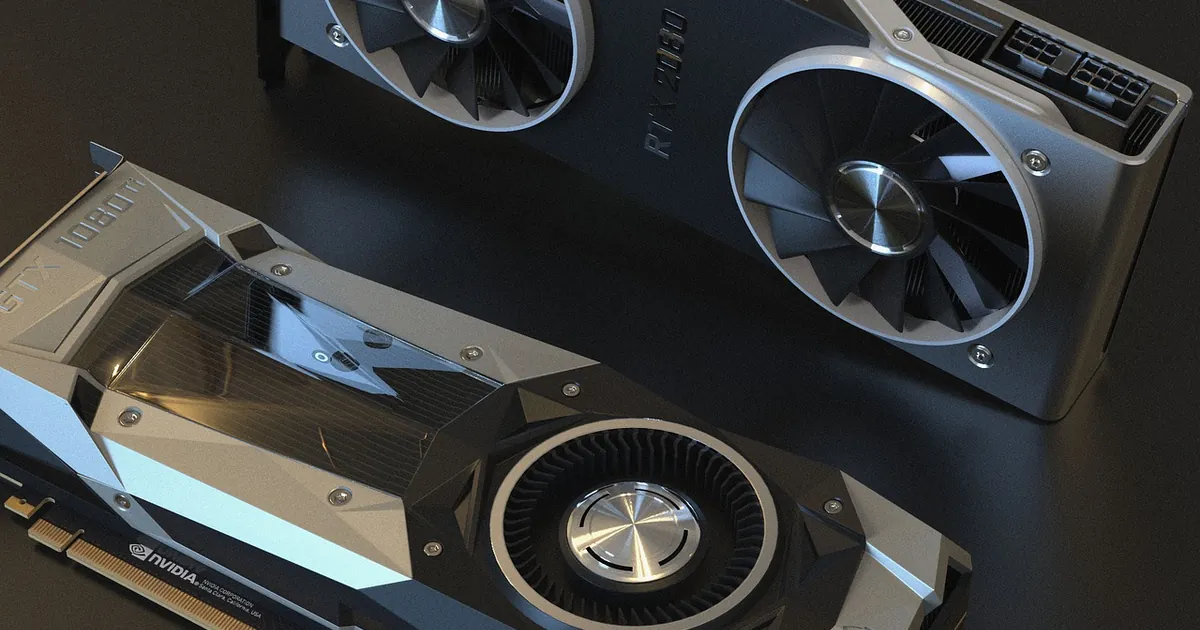
The Financial Times reported that Chinese technology companies bought more than 1 million Nvidia gaming and workstation GPUs in a year to fill a gap in demand for AI computing power. A Tom's Hardware page captured on October 26, 2026, relayed the report, but the evidence does not give the original Financial Times publication date.
Who is affected
For Nvidia, the report said the GPUs mainly included the RTX Pro 6000D, RTX Pro 5000 and RTX 5090. It said the chips could not compete with domestic flagship products such as Huawei's Ascend 910C, but could be used for simpler AI workloads. The report also said demand for Nvidia GPUs was partly driven by CUDA, whose ecosystem was described in comparison with Huawei's Cann alternative.
Nvidia said that after the U.S. government required a license for H20 exports to China, it recorded a $4.5 billion charge in fiscal first-quarter 2026 for excess H20 inventory and purchase obligations. Nvidia also said H20 sales were $4.6 billion in fiscal first-quarter 2026 before the new licensing requirement, while an additional $2.5 billion of H20 revenue could not be shipped.
The case for and against
The case for substitution demand is that the report said domestic Chinese AI chip production had doubled over a relative period that the evidence does not resolve, but still could not meet demand from major technology companies. It said 3.5 million chips were expected to be produced domestically, while demand far exceeded 5 million, leaving a shortfall of nearly 1.5 million chips. The report also said demand for Nvidia GPUs was partly driven by CUDA, whose ecosystem was described in comparison with Huawei's Cann alternative.
The case against treating the alternatives as equivalent to flagship AI hardware is that the reported GPUs could not compete with Huawei's Ascend 910C and were useful for simpler AI workloads. Tom's Hardware reported that the RTX 5090 had a $1,999 recommended price, but was available from only three third-party retailers at prices of at least $7,199 and had nearly disappeared from the market.
Inference: The gap between domestic AI chip supply and demand corresponds with purchases of more than 1 million export-control-compliant Nvidia gaming and workstation GPUs, suggesting that companies may be using substitute hardware to fill part of their computing needs.
Inference: Substitute GPUs can support simpler AI workloads but cannot compete with domestic flagships, so they cannot be directly equated with data-center-scale AI training capacity.
Risks
Nvidia said the licensing requirement led to a $4.5 billion charge related to excess H20 inventory and purchase obligations, and that an additional $2.5 billion of H20 revenue could not be shipped in fiscal first-quarter 2026. Inference: The licensing restriction affected both Nvidia's China-market supply and its financial results because the company recorded an H20-related charge and revenue it could not ship.
The U.S. Commerce Department's BIS said license applications for H200, AMD MI325X and similar chips for export to China would be reviewed case by case. Applicants must meet conditions involving production capacity, buyer export compliance and independent third-party testing in the United States.
BIS Under Secretary Jeffrey Kessler said: “Permitting the sale of the H200 to China under controlled conditions will strengthen the American technology ecosystem.”
What to watch
The evidence does not provide the original Financial Times publication date, so it cannot resolve whether the report's relative period means 2026 or the prior year. It also does not give the model-by-model breakdown of the more than 1 million GPUs or quantify the shares of substitute GPUs used for training, inference or other AI workloads.
The evidence does not provide Nvidia's share price, valuation or future financial forecasts.
Sources
- Chinese AI companies buy 1 million Nvidia gaming and workstation GPUs in a single year, report claims — export control-compliant chips flood the market to bridge gap in compute demand | Tom's HardwareTom's Hardware (www.tomshardware.com)
- NVIDIA Announces Financial Results for First Quarter Fiscal 2026 | NVIDIA Newsroom Artificial Intelligence Computing Leadership from NVIDIAic_arrow-back-to-topFacebookLinkedInInstagramYouTubeNVIDIA (nvidianews.nvidia.com)
- Lock (www.bis.gov)